A couple of weeks ago I found an old hinged box large enough to hold kindling, but small enough to fit in a space next to our wood stove. Within minutes of hauling the box into position, my two cats had jumped on top of it, and I realized I had a perfect little inglenook in the making.
Although the box itself needs some kind of cosmetic help (sponging? marbling?), I decided to make a seat cushion first and deal with the faux treatment later.
Given that our living room furniture is on the monochromatic side, I wanted to introduce a pop of color in this corner without creating too big of a transitional shock. At JoAnn’s (our nearest fabric store), I found a print with a light background and a splash of something in the coral/pomegranate/paprika family.
The seat cushion went together quickly, but despite the cheerful color and print and the striped contrasting piping, the overall visual effect was too bland.
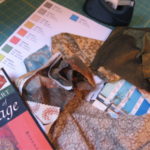
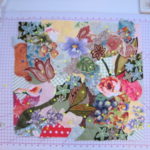
What to do? I didn’t have any other fabric that pulled colors from our armchair in the other side of the room. The only solution (short of schlepping out to another fabric store and spending more money and gas): create my own fabric. Once again, I turned to the favorite book in my fiber arts library: Rosemary Eichorn’s superb Art of Fabric Collage (Taunton Press, 2000). Eichorn’s technique, in a nutshell, involves cutting random shapes and motifs from twenty or more different fabrics, assembling them in a pleasing manner, stitching close to the edges of the motifs, embellishing the entire surface with novelty threads, and then tossing the whole thing into the washer and dryer so that the edges ravel and fray. The end product looks and feels like a lush tapestry — the ideal heft for a pillow or wall hanging.
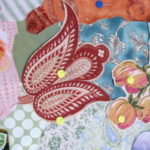
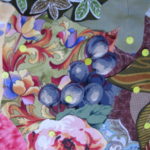
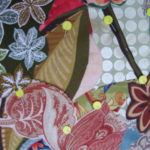
I started pulling swatches, cutting, and fiddling with placement yesterday, and this morning completed the pinning. Click on the thumbnails below for more details. All I have to do now is stitch around all of the pinned edges, throw the pillow in the wash, and trim the ragged edges.